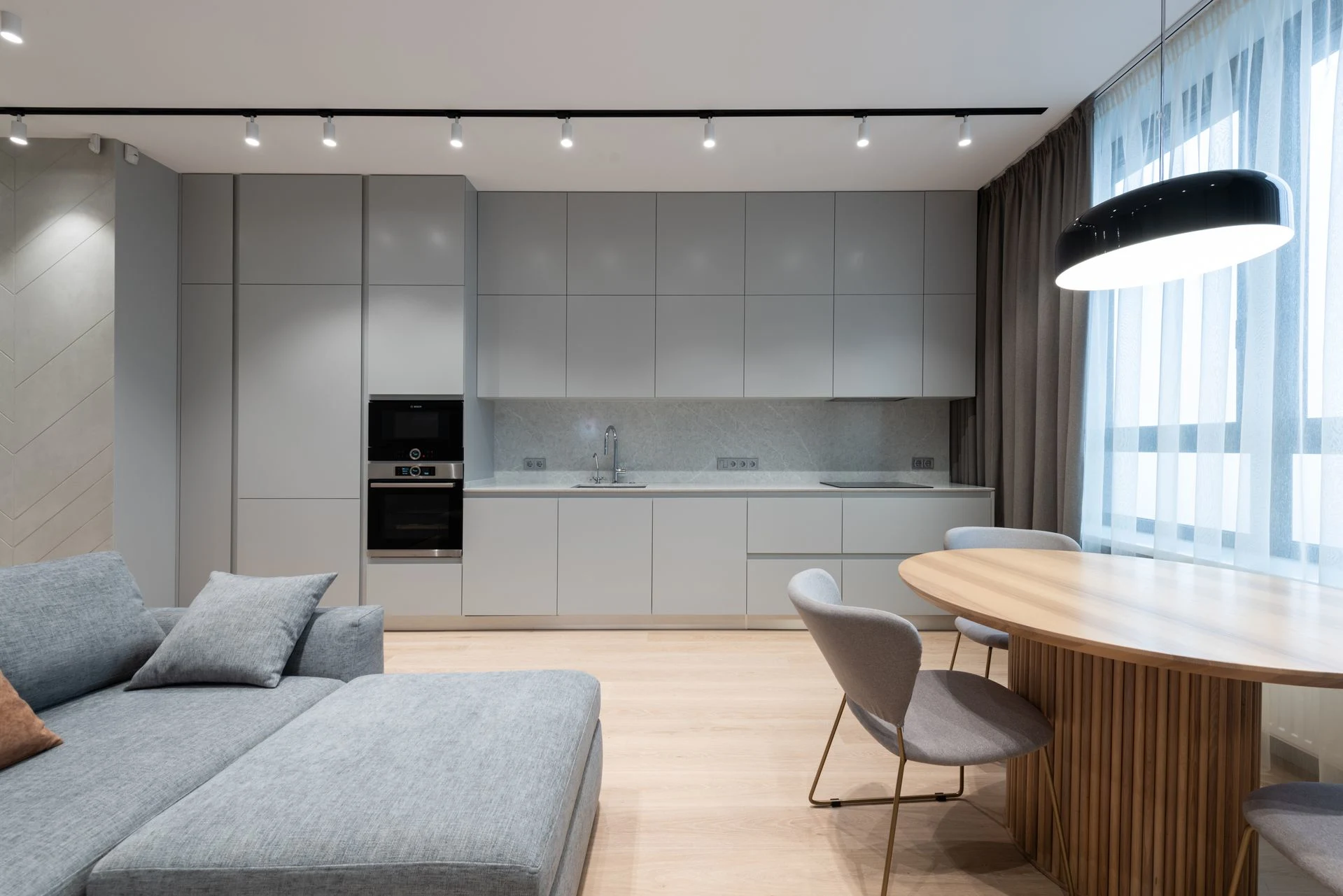
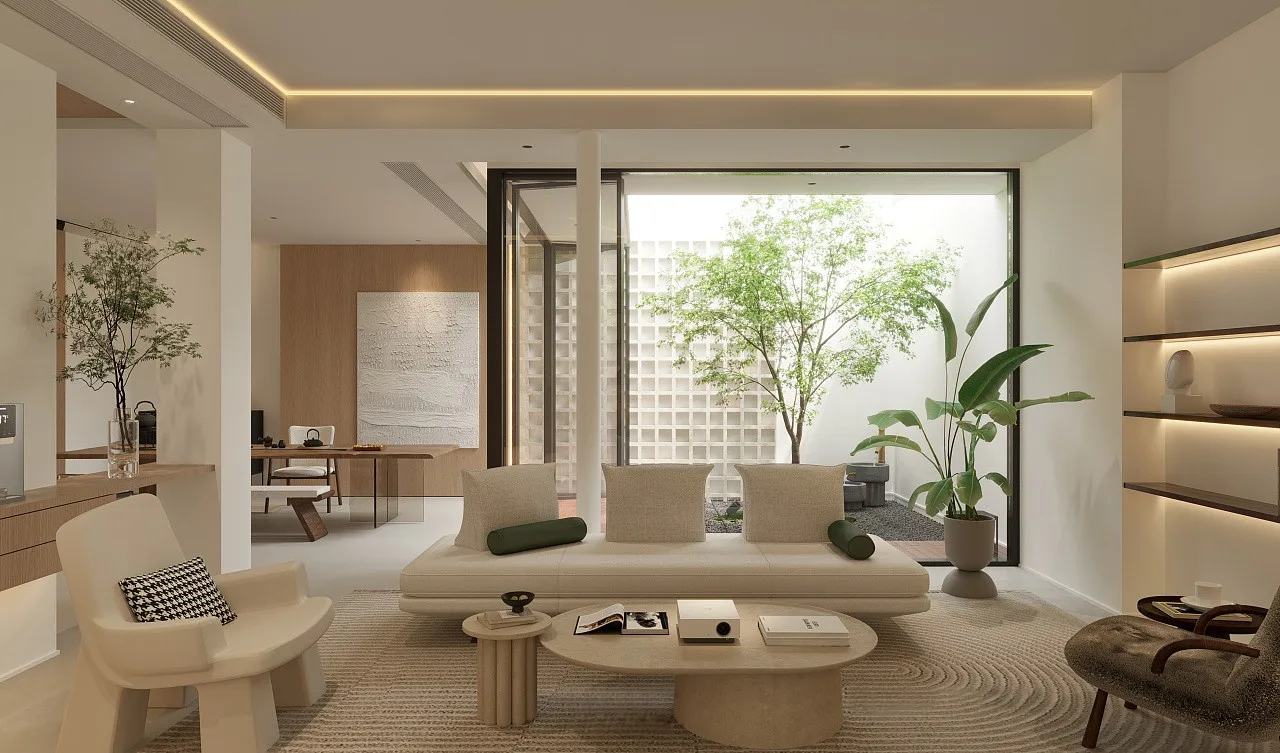
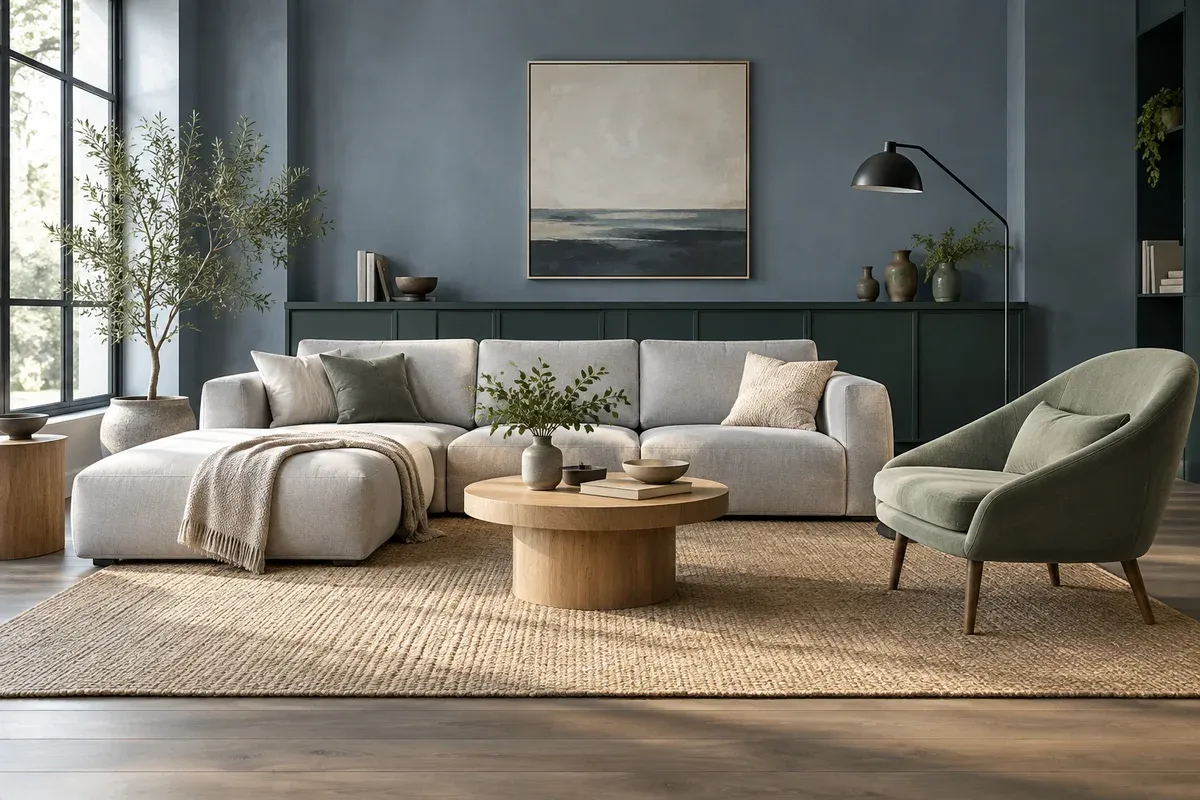
Plan a living room around how it is actually used: relaxing, hosting, or watching together. Mark the entry and through-routes before choosing furniture so circulation stays clear.
Start with the Main Seating
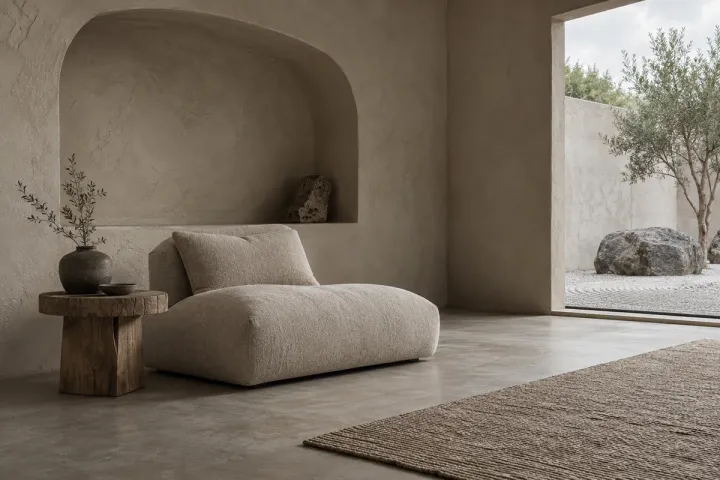
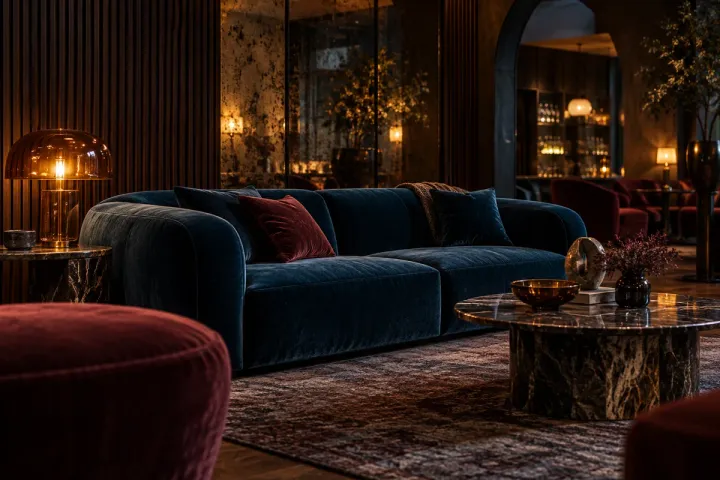
Aria Modular Sofa can adapt to the room shape, while Nara Lounge Chair adds an accent seat without making the composition too heavy. Keep Sora Coffee Table within easy reach of every seat.
Repeat only a few materials—such as neutral upholstery, warm timber, and dark metal. Then read our modular sofa guide and rug guide to complete the layout.
Define the Room’s Hierarchy
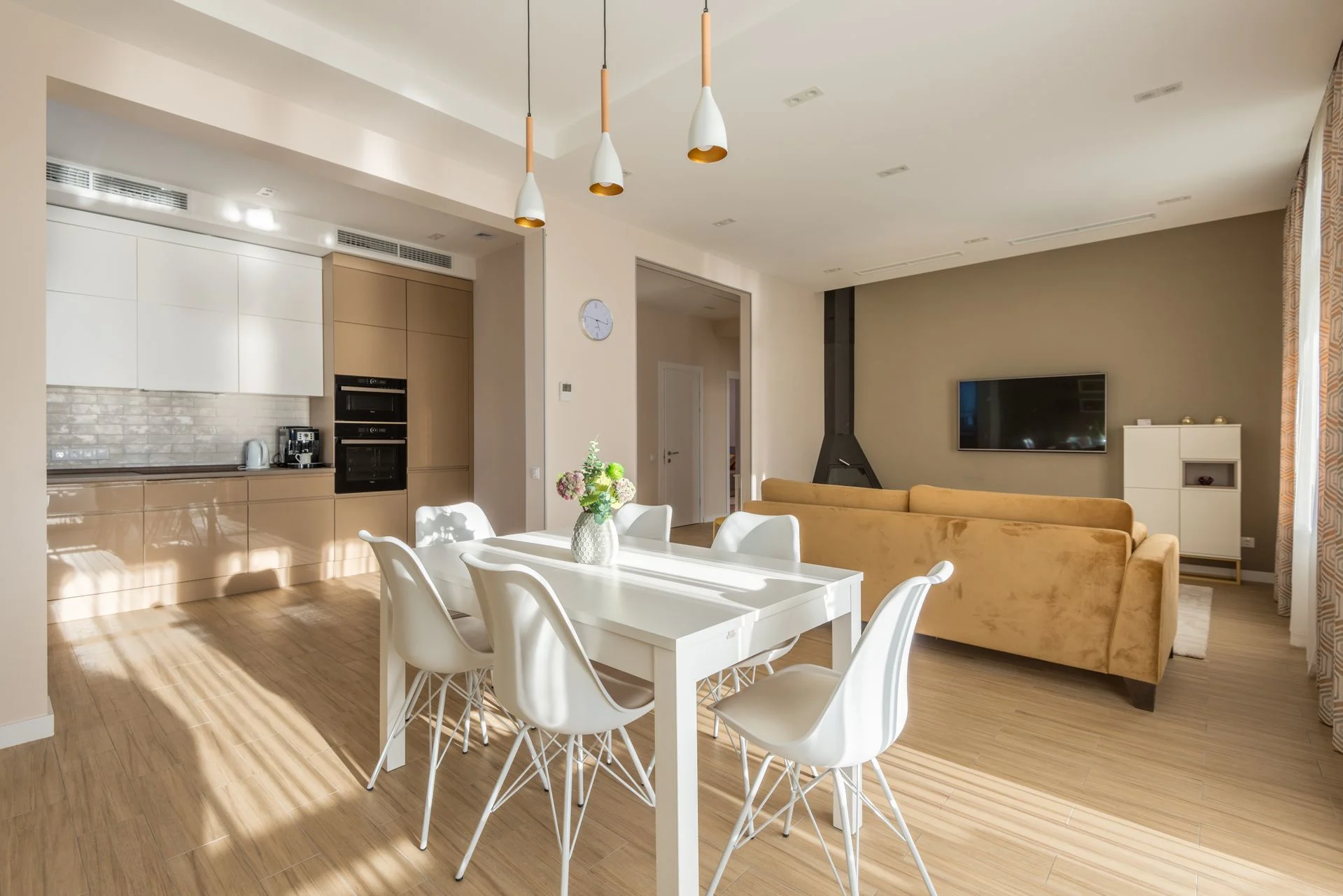
Begin with the activity that happens most often. A living room used for conversation needs seating that faces one another, while a room used for films may need a clear relationship between the sofa and screen. Hosting, reading, children’s play, and occasional work can share the room, but they should not all compete for the same centre.
Choose one anchor, usually the main sofa or the view beyond it. Supporting furniture should make that anchor easier to use rather than introduce several competing focal points. This simple hierarchy helps a large room feel composed instead of sparsely filled.
Measure Circulation Before Scale
Mark the sofa, chairs, and coffee table on the floor, including the area required when people sit down and stand up. Check the path from the entrance to adjoining rooms, the route to windows, and the clearance around cabinets. A generous room can still feel awkward when its main route is interrupted by a table corner or a chair set at the wrong angle.
Do not judge furniture only against an empty wall. Check how its depth changes the centre of the room and how its height affects sightlines. A lower piece can preserve a view across the space, while taller storage may be better placed away from the entry so it does not close the room immediately.
Build Conversation and Viewing Zones
Arrange seating so people can speak without turning their bodies sharply, then make sure the arrangement also supports the room’s secondary use. A lounge chair can face the sofa for conversation and turn towards a window when the room is quiet. A modular sofa can separate activities without needing a physical partition.
Keep the coffee table close enough to use from each main seat, but not so close that knees and routes are blocked. If the table needs to serve many seating positions, a pair of smaller tables may be more flexible than one oversized surface, provided they do not multiply visual clutter.
Use Light and Texture to Add Comfort
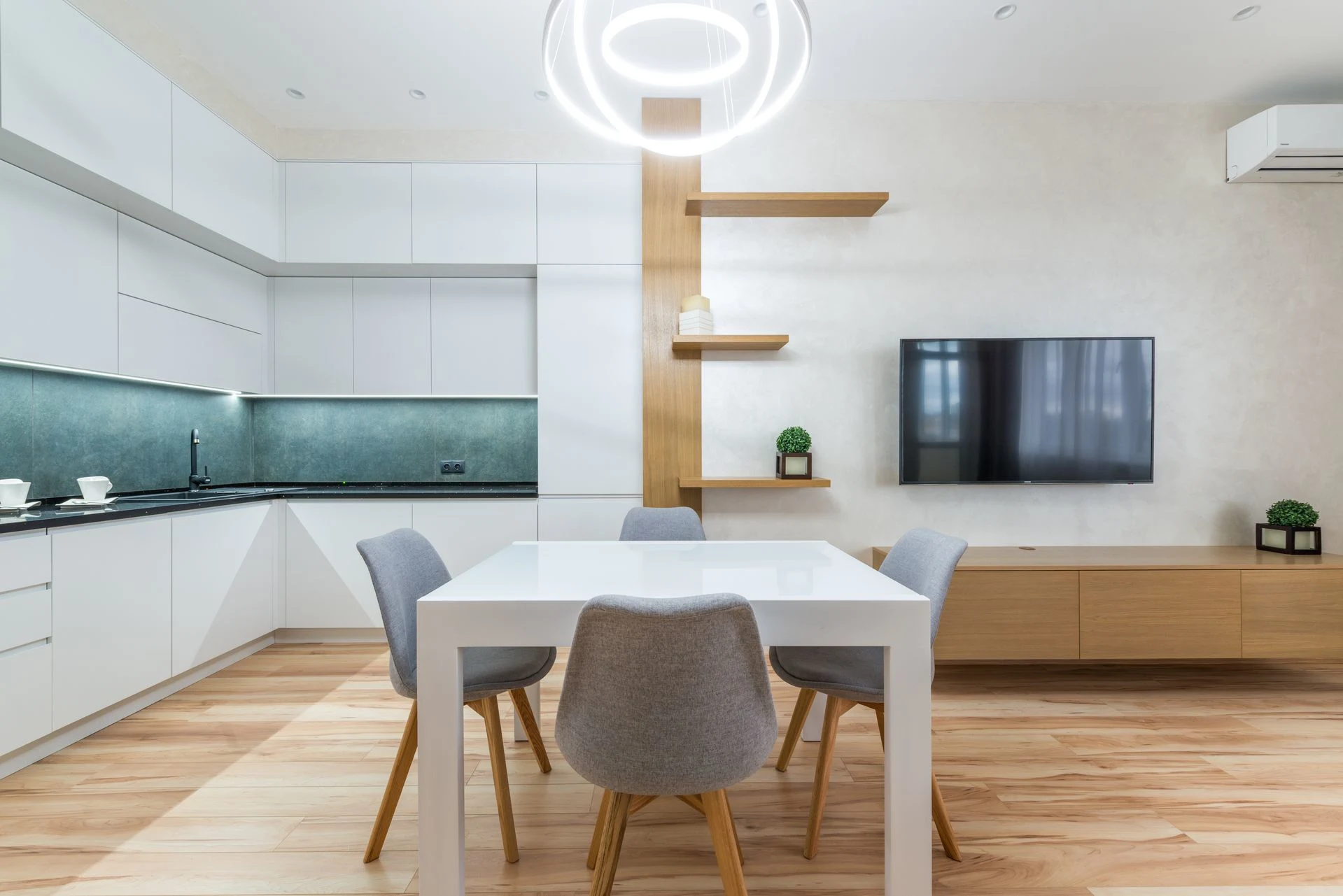
Layer general light with a reading lamp, wall light, or floor lamp so the room can change mood after sunset. Position lamps around activities rather than scattering them evenly. Textiles, timber, and upholstery soften the hard edges of a modern room, but repeating a small number of materials is usually more effective than adding a new finish for every object.
Rugs help gather seating into one composition when their scale is generous enough. Leave enough exposed floor for the room to remain easy to clean and keep the rug clear of door swings. A rug is a zoning tool, not a substitute for a workable furniture plan.
Common Living-Room Mistakes
- Buying a sofa before considering the room’s main activity and circulation.
- Pushing every piece against the wall even when the room needs a more social arrangement.
- Choosing a coffee table that is too small to serve the seating or too large to leave a route.
- Adding chairs and side tables until the room loses negative space.
- Using one overhead light for every mood and activity.
- Mixing too many materials and focal points in an attempt to make the room feel finished.
A comfortable modern living room is edited rather than empty. Start with the daily routine, protect the routes, and let each additional piece earn its place through comfort or function.