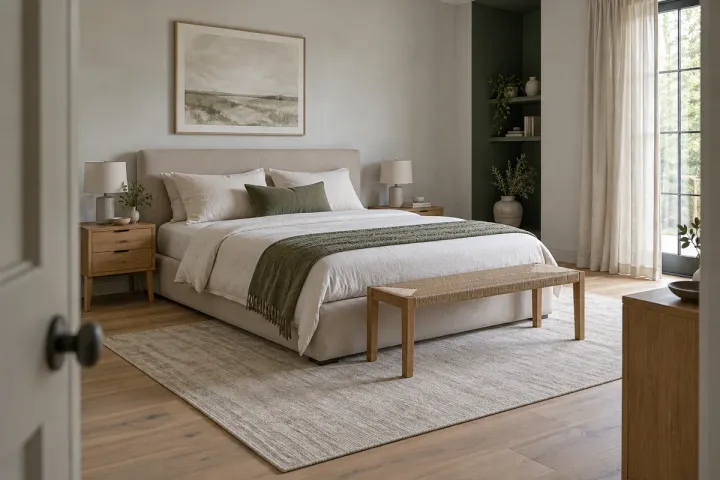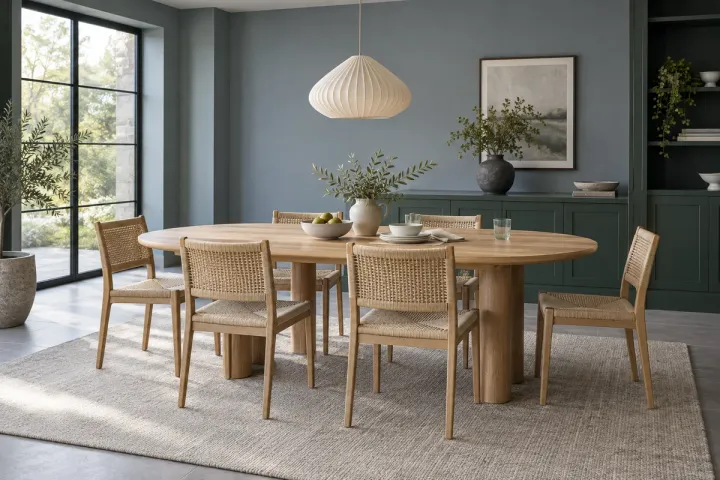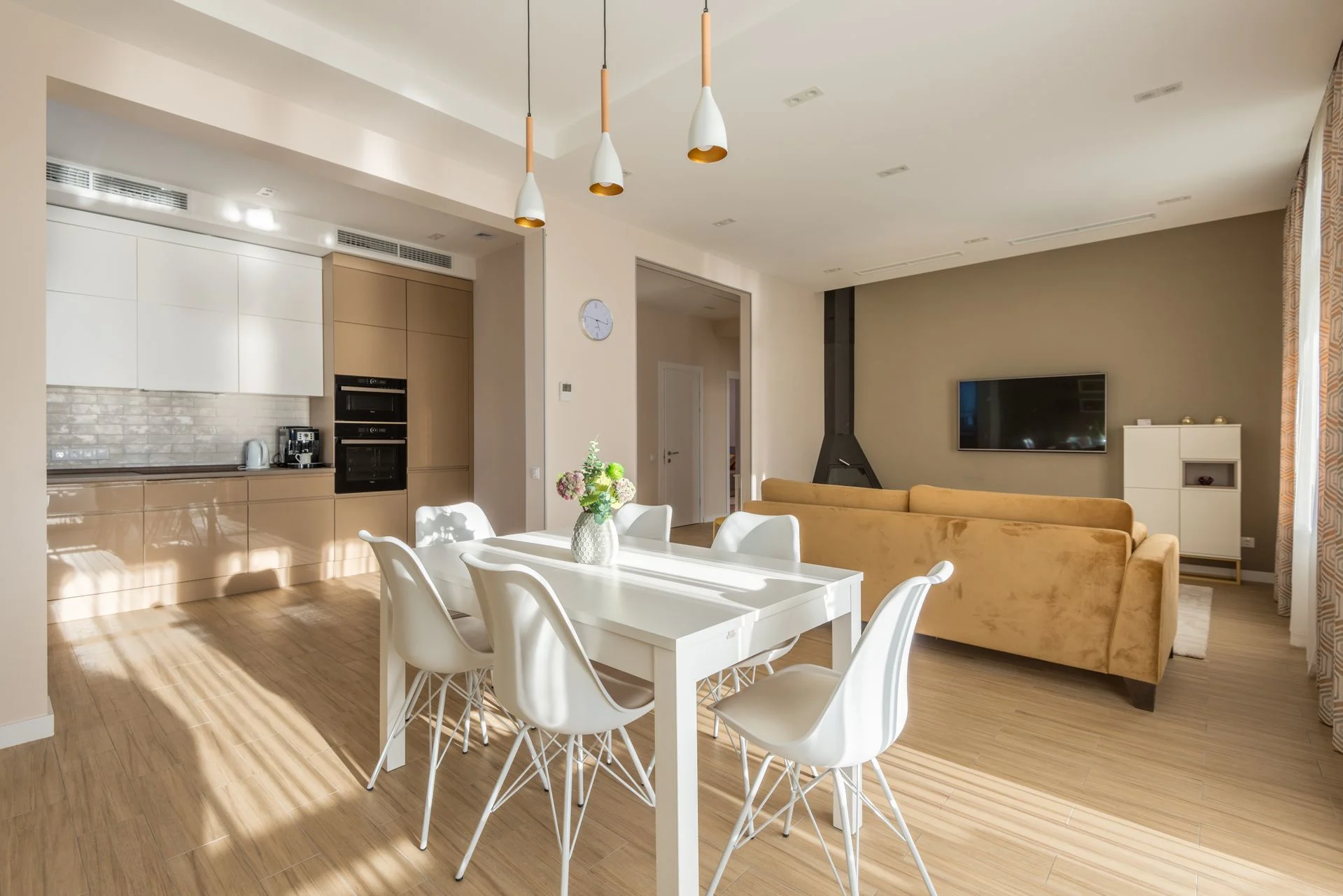
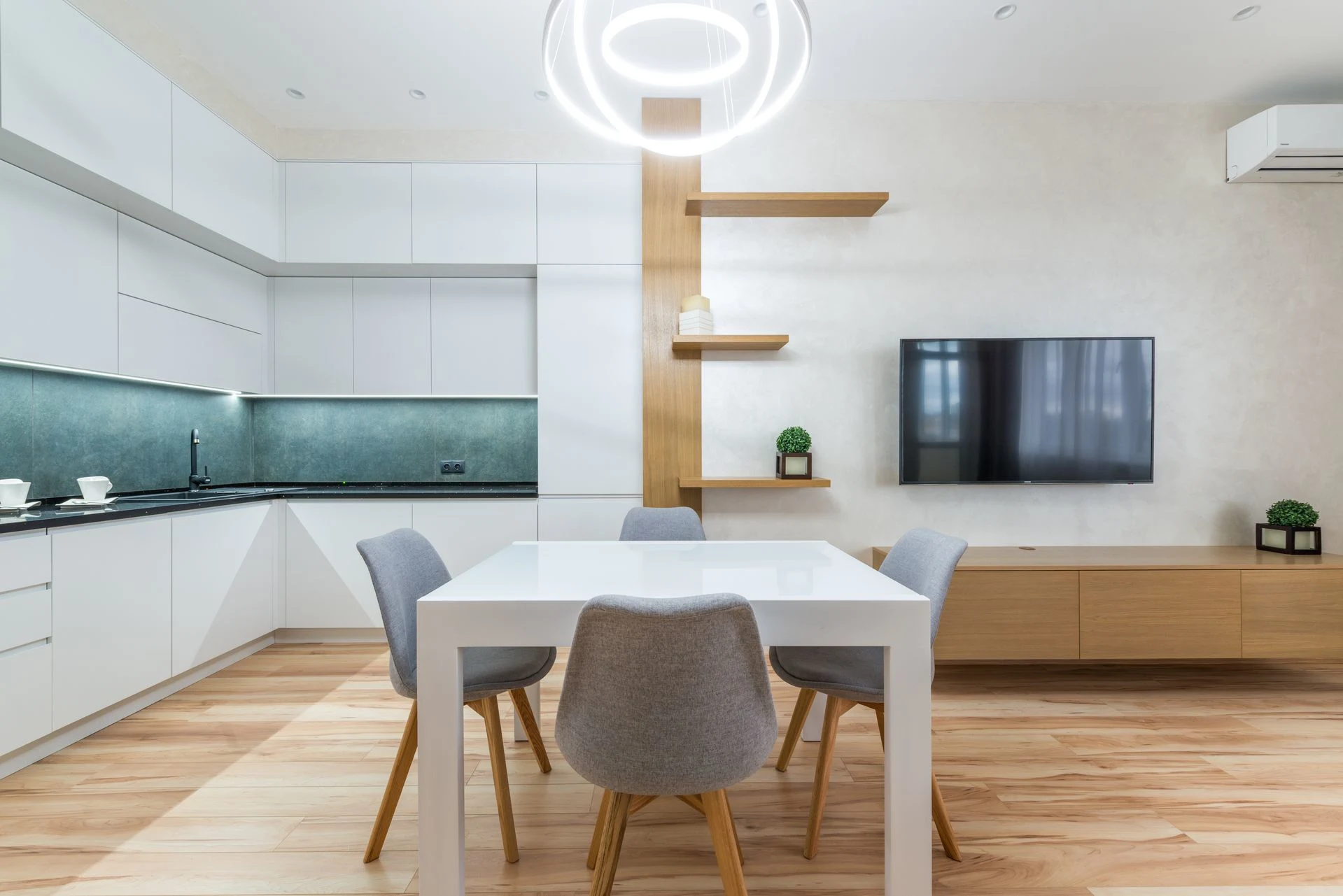
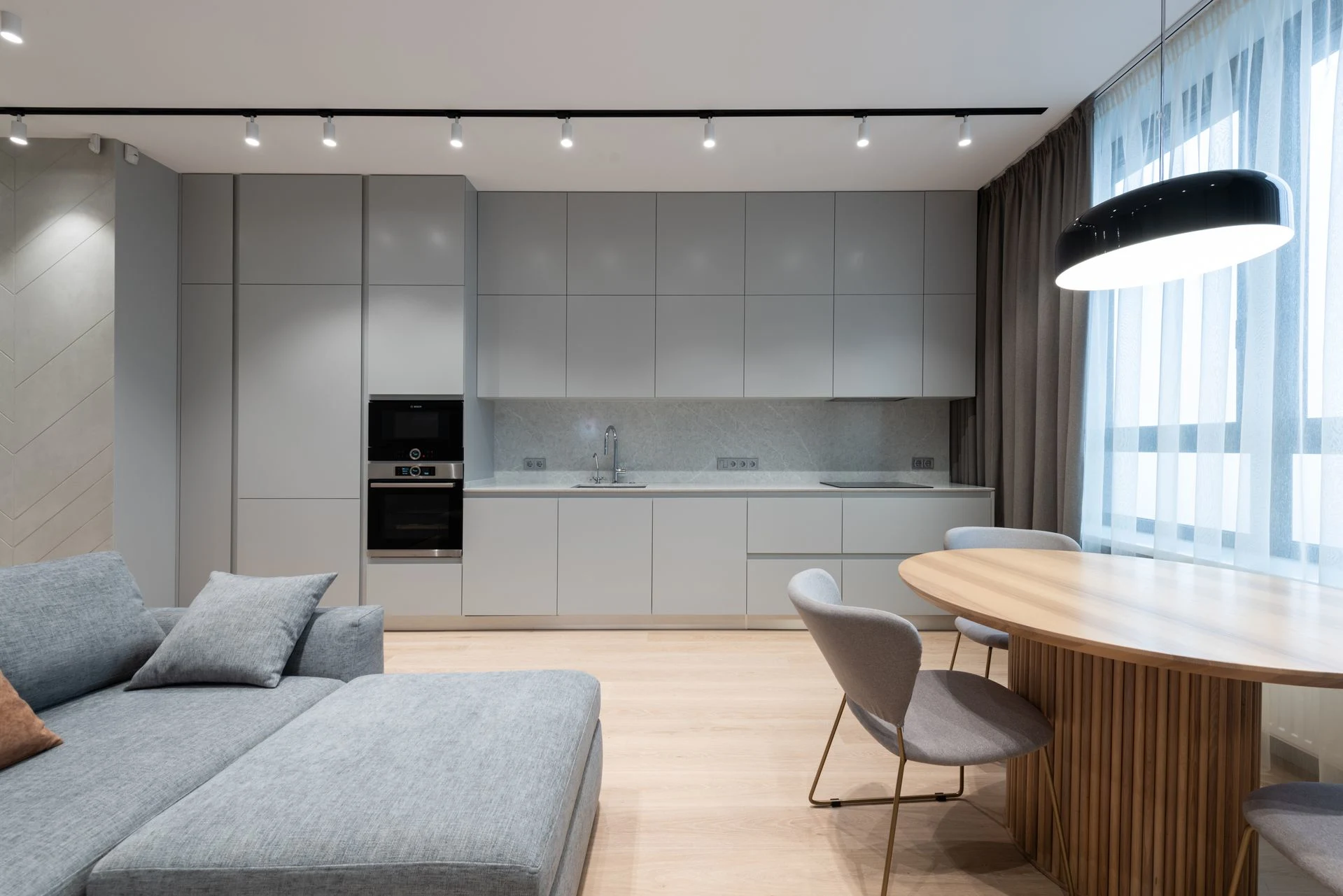
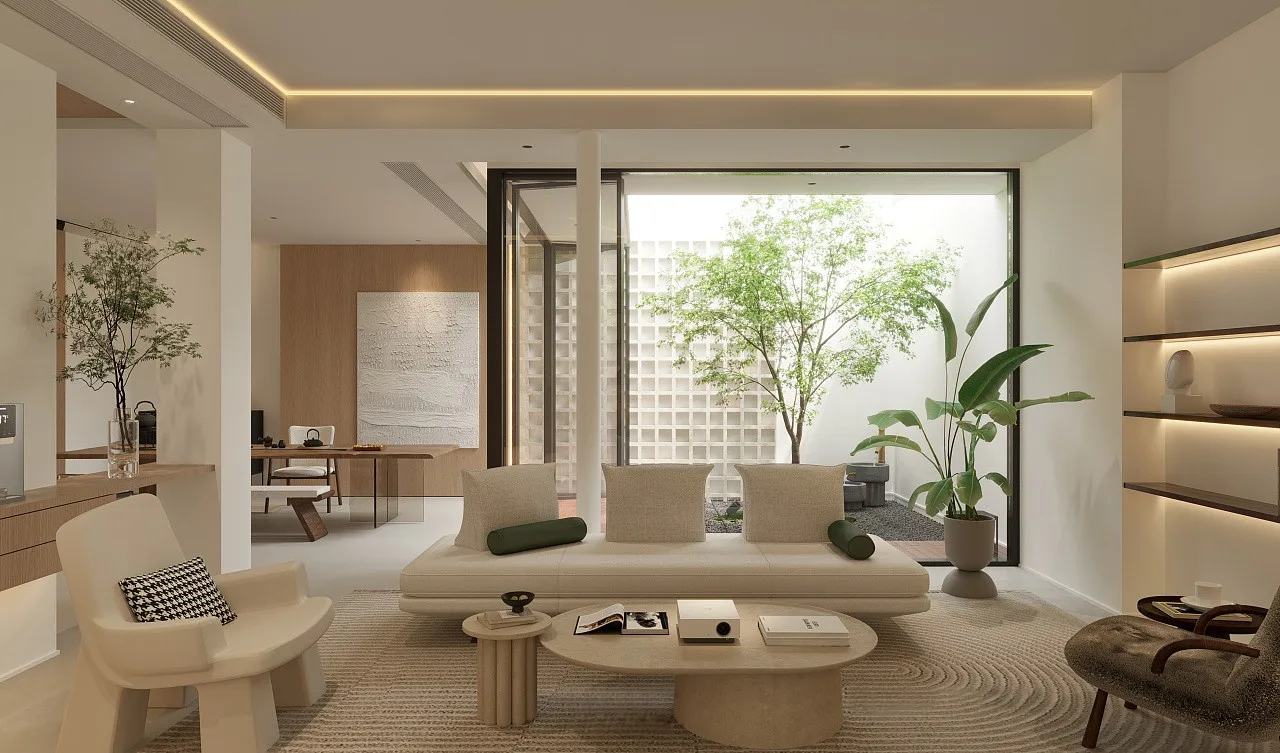
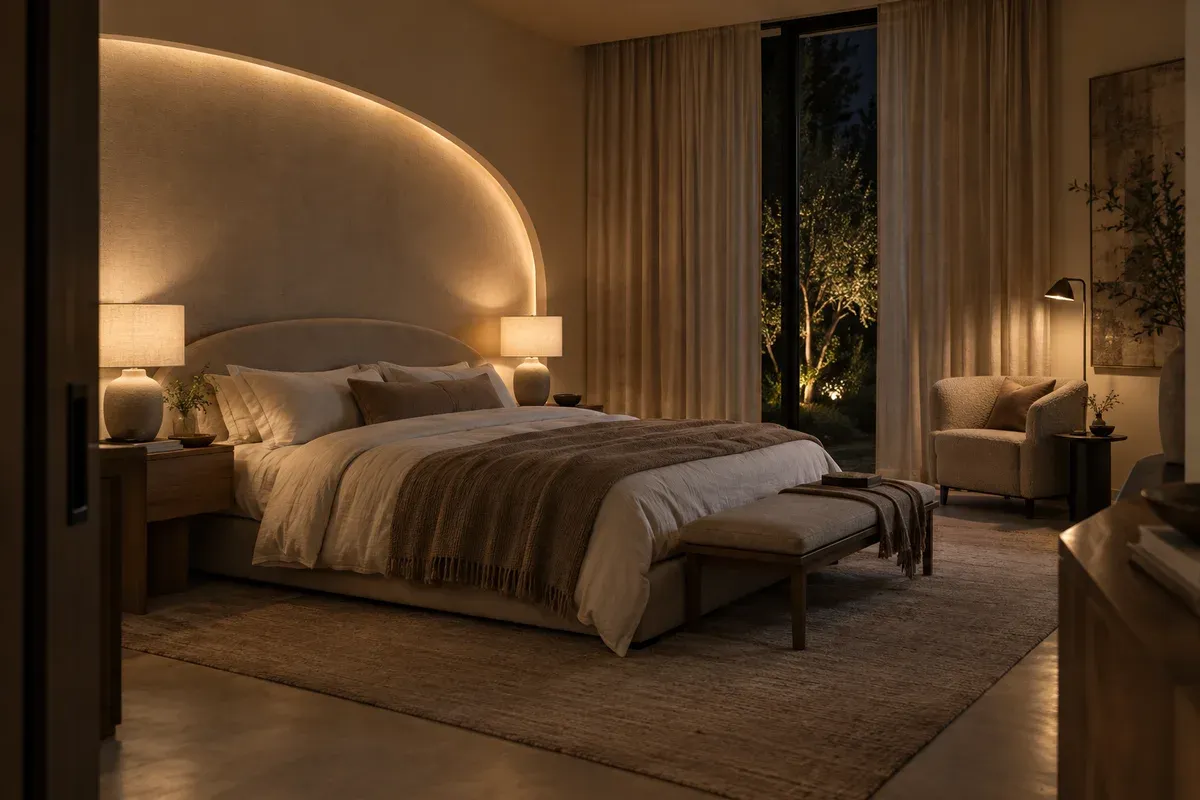
Layered lighting separates light for the room, for a task, and for atmosphere. It stops a room from feeling flat or overly bright at night.
Use Three Light Functions
Start with Aero Pendant Light for ambient dining light. Add Yura Task Lamp for work, then Mori Wall Light or Luma Arc Floor Lamp for an accent layer.
Place lighting around activity: reading beside a chair and pendant light above the table. Use our bedroom guide and dining-table guide to plan the points early.
Begin with the Room’s Daily Rhythm
Lighting should respond to how a room changes during the day. Morning light may support breakfast and cleaning, afternoon light may need to reduce glare, and evening light should help the room feel settled rather than exposed. List the activities that happen in the room and identify which ones need clear visibility, concentrated light, or a softer atmosphere.
This prevents a common mistake: expecting one bright source to handle every activity. A dining table, reading chair, kitchen counter, and work surface each benefit from light aimed at the task. The rest of the room can remain calmer so the eye is not forced to process the same brightness everywhere.
Balance Ambient and Task Light
Ambient light establishes the overall level of brightness, but it should not be responsible for every detail. A pendant can illuminate a dining area while a separate lamp supports reading or conversation nearby. In a living room, combine general light with a floor or table lamp so the room can be used at a lower overall brightness in the evening.
Task light needs to arrive from a useful direction. Place a reading lamp beside the chair rather than behind it, and position desk lighting so the hand does not cast a shadow across the work. If a surface has more than one use, choose a movable lamp or a dimmable fitting that can adapt.
Plan Position, Height, and Glare
The light source is only effective when its position suits the furniture below it. A pendant that is too high can lose its sense of focus, while one that hangs too low may interrupt sightlines or bump into people standing up. Check the fixture against the table, ceiling height, and the way people move around the room before fixing it in place.
Glare is often a placement problem rather than a bulb problem. Keep bright sources out of direct sight where possible, avoid aiming light straight at screens or reflective surfaces, and test the room at the hours when it is most often used. Wall lights and lampshades can soften the source while still giving the room definition.
Use Colour Temperature with Intention
Keep the colour of light coherent within each zone. Warmer light usually suits bedrooms, living rooms, and relaxed dining, while a workspace may need a clearer, more focused source. Mixing noticeably different temperatures in one small room can make the atmosphere feel accidental.
Do not judge a lamp only when it is switched on in a showroom. Wall colour, timber, upholstery, and daylight all change how the light is perceived. A simple evening test with the main furniture in place will reveal more than a specification sheet alone.
Common Layered-Lighting Mistakes
- Relying on one ceiling fixture and compensating with excessive brightness.
- Placing a pendant by room geometry without checking the table and circulation below it.
- Putting a task lamp behind the user, creating shadows across the work surface.
- Mixing too many colour temperatures in one visible zone.
- Adding decorative lamps without a practical switching or dimming plan.
- Ignoring glare from screens, mirrors, glossy tables, or windows.
The best lighting plan is adjustable but simple. Give each layer a clear purpose, connect it to the furniture and activity below, and make the controls easy to reach.