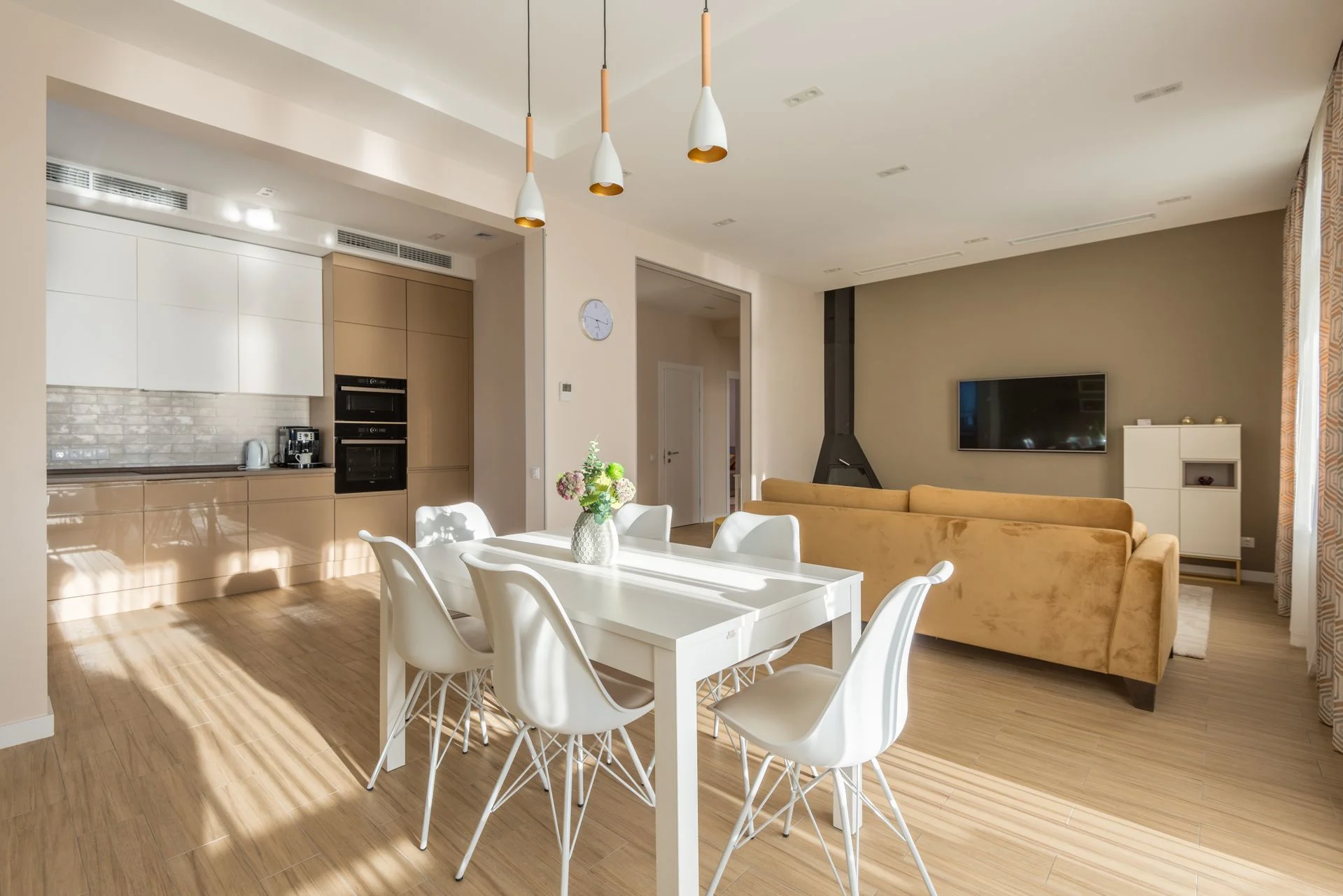
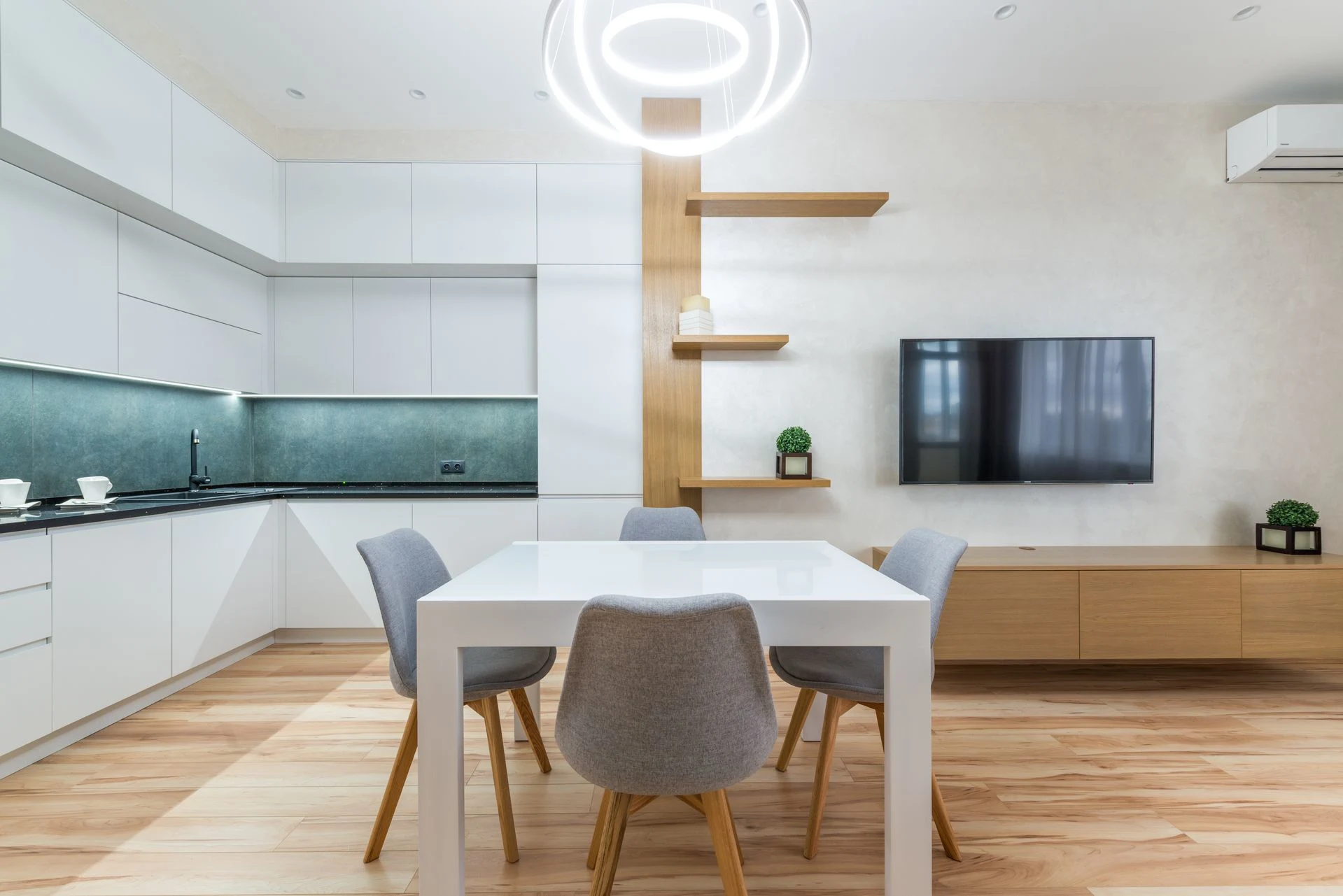
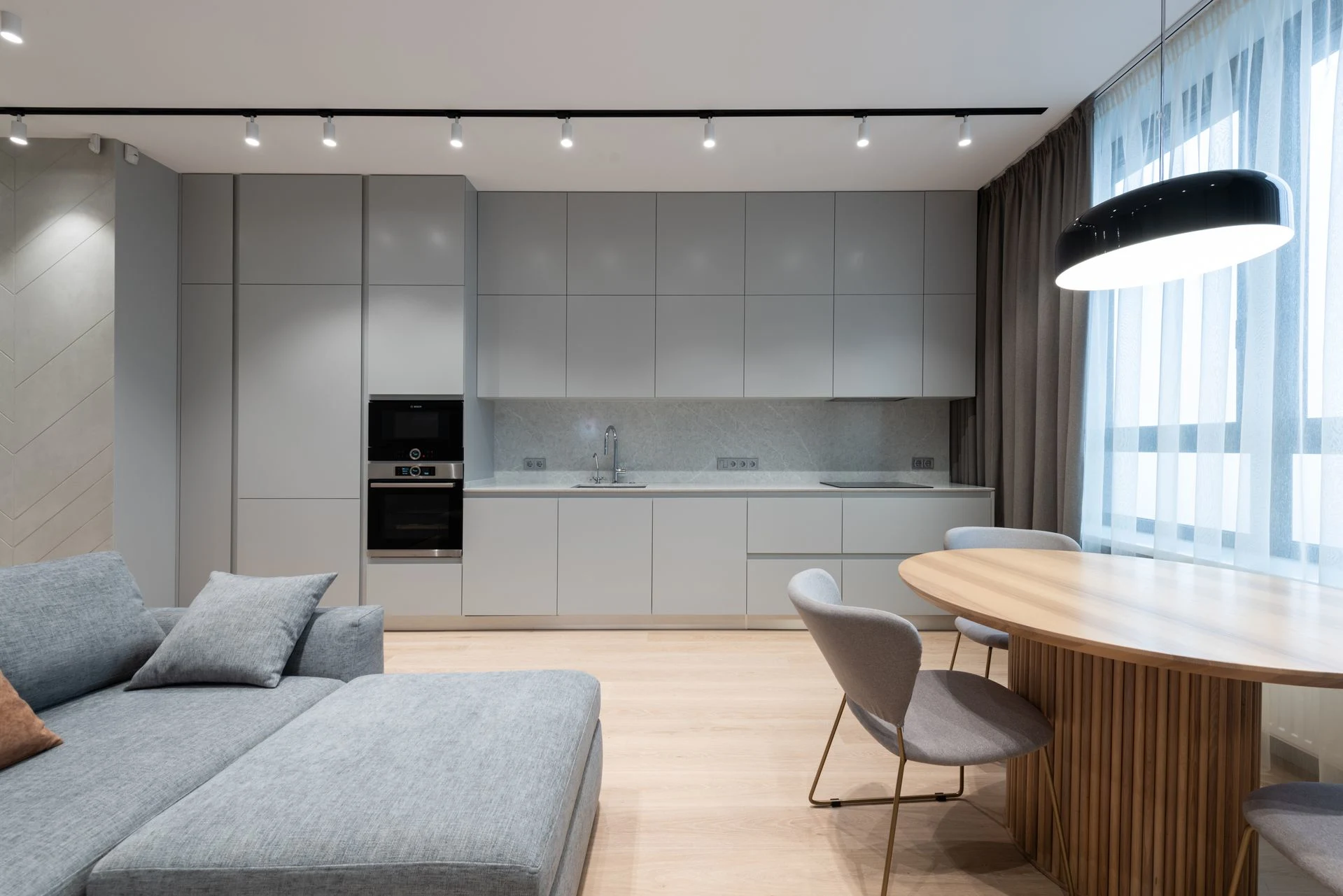
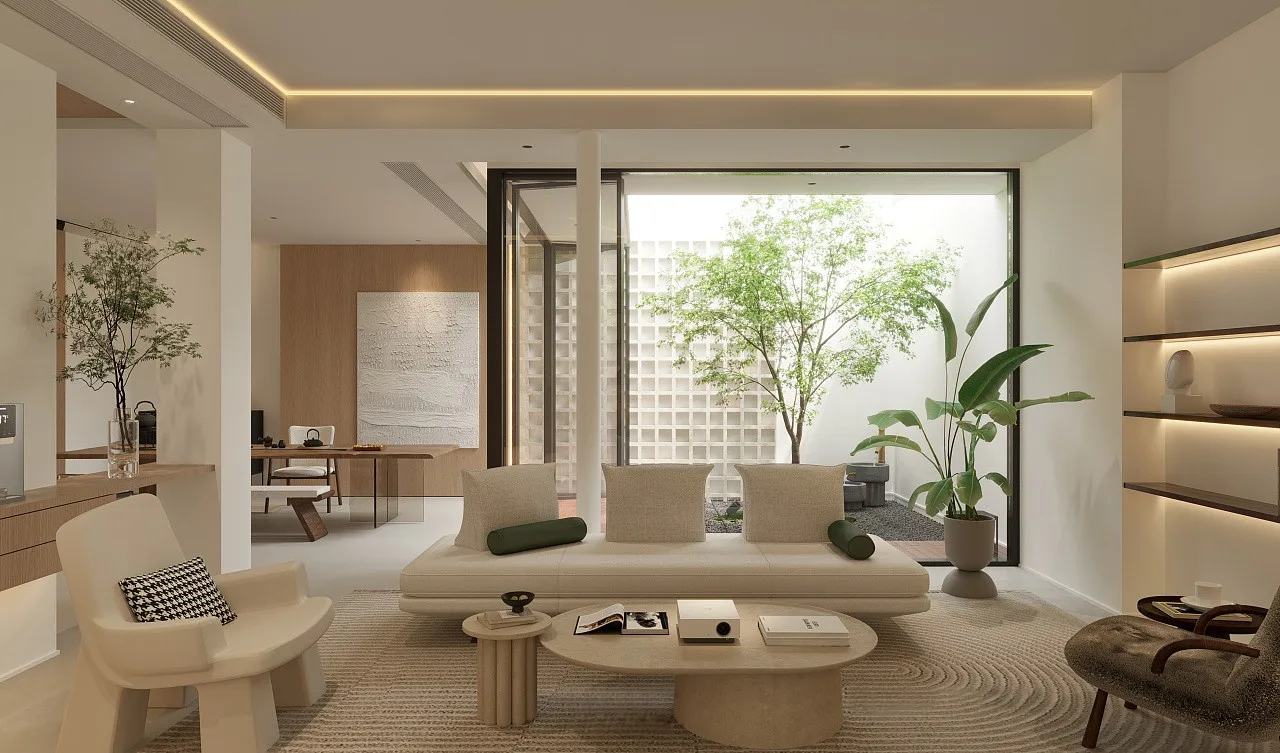
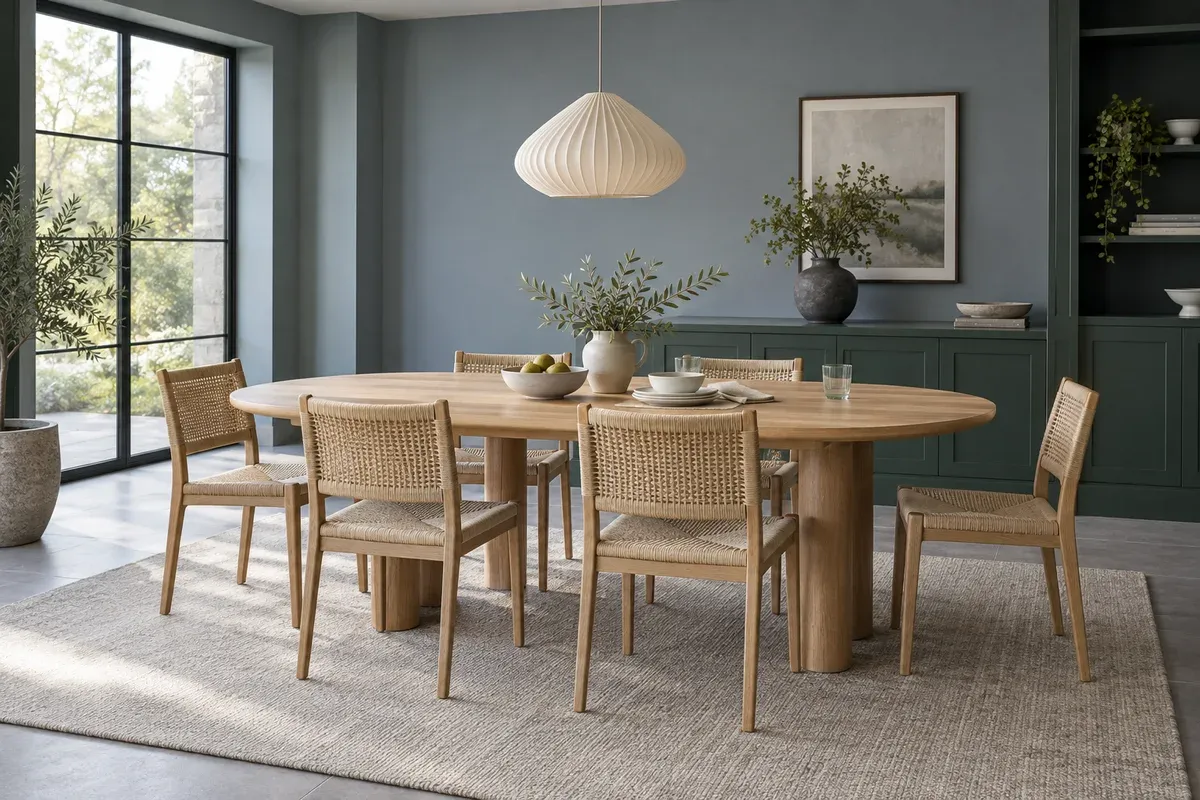
Start with everyday diners and the number you host. A round table improves flow in a tight room; a rectangular table works naturally in a long dining area.
Leave Space for Chairs
Soma Extendable Dining Table flexes between everyday meals and guests, while Arlo Round Dining Table keeps compact conversations easy. Pair either with Aster Dining Chair at the right height.
Oka Low Sideboard stores tableware and supports lighting or objects. Read our storage guide and lighting guide to finish the room.
Measure the Room Around the Table
The table footprint is only the beginning. Measure the space needed for chairs to slide back, for people to pass behind seated diners, and for doors or drawers nearby to open fully. A table can fit between two walls yet make the room uncomfortable if every chair has to be pushed in before anyone can move around it.
Mark the table and chair zones on the floor before purchasing. Walk from the kitchen or serving area to each seat and test the route with chairs pulled out. This reveals whether the table supports daily movement or only fits an empty plan.
Match Shape to the Layout
Round tables work well where circulation needs to flow around a compact footprint. They remove sharp corners and make conversation feel more equal, but their central area can be less efficient for long tableware or larger groups. Rectangular tables suit long rooms and can align with a wall, window, or kitchen run. Oval forms offer softer edges while preserving a longer serving surface.
Choose the shape according to the room first and the trend second. The best table leaves a readable route to the rest of the home and does not make one side of the dining area permanently inaccessible.
Plan Seating for Real Use
Count the people who eat there most often, then consider occasional guests. An extendable table is useful when extra capacity is needed only sometimes, provided there is enough room for the extended configuration. Aster Dining Chair should sit comfortably beneath the table and allow knees to move without the apron or legs becoming an obstacle.
Do not choose chairs by appearance alone. Check seat height, back support, armrests, and the space needed to pull each chair out. A lighter chair can make a compact dining area easier to reconfigure, while a more substantial chair may be worthwhile when meals are long and frequent.
Select Material for the Routine
Dining furniture has to handle spills, heat, cleaning, and repeated contact. Consider how much maintenance the household is willing to do before choosing a delicate finish. Timber can bring warmth and age well when cared for, while a more forgiving surface may be better for families or frequent entertaining.
Keep the material palette connected to adjacent areas. The table does not need to match every piece exactly, but repeating one finish in the chairs, sideboard, or lighting can make an open-plan room feel deliberate.
Finish the Dining Zone
Lighting should centre on the table without obstructing conversation or sightlines. A pendant can define the dining area, while low storage such as Oka Low Sideboard keeps tableware close and provides a surface for a lamp or selected objects. Avoid filling that surface with items that reduce the room’s working space.
Use a rug only when its size allows chairs to remain on it as they move. A rug that catches chair legs creates frustration and can make the table feel smaller. Keep the route between dining, kitchen, and living areas clear so the room remains useful beyond mealtimes.
Common Dining-Table Mistakes
- Choosing a table by its top dimensions without measuring pulled-out chairs.
- Buying a permanently large table for guests who visit only occasionally.
- Ignoring door swings, kitchen routes, and the path to serving storage.
- Selecting chairs that look light but are uncomfortable for longer meals.
- Hanging a pendant without checking head height and the sightline across the table.
- Treating the dining area as isolated when it shares an open-plan room.
A successful dining table supports ordinary meals first. Start with the daily number of diners, test the complete footprint, and add flexibility only where it genuinely improves how the home is used.